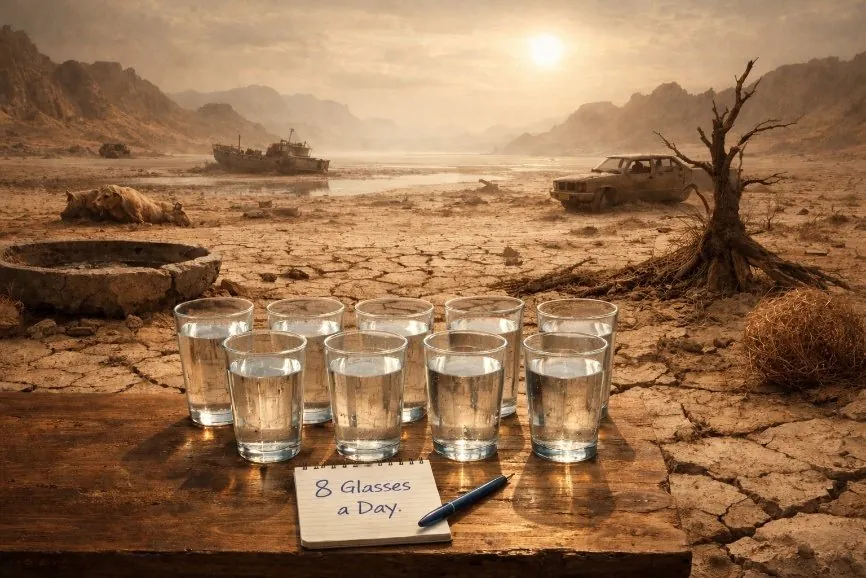
Few health questions cause as much confusion. Some say eight glasses. Others say drink only when you're thirsty. Some insist tea and coffee count; others say they cancel water out. The result? Most people end up guessing, and many guess wrong.
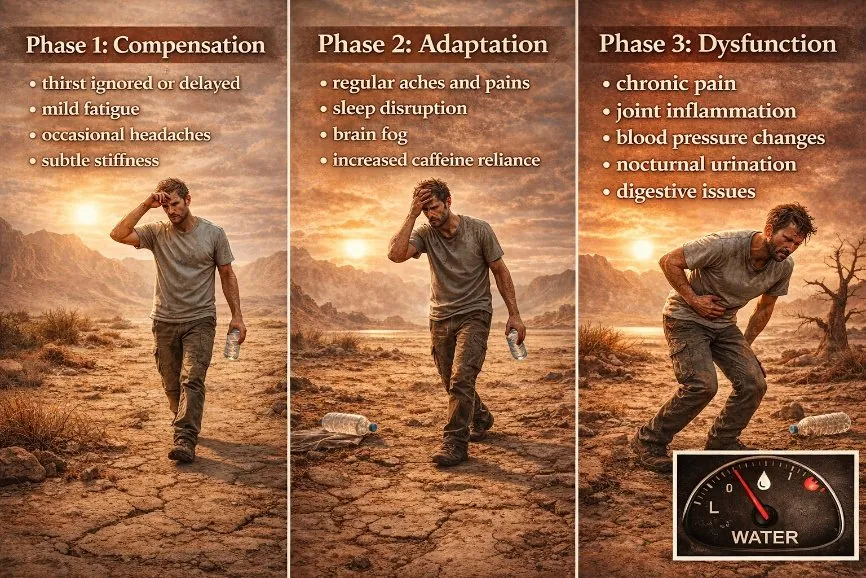
Waiting for thirst is the riskiest guess of all. As Chapter 2 explains, thirst typically appears only after you've lost 1–2% of your body water, the point where focus and mood are already slipping.
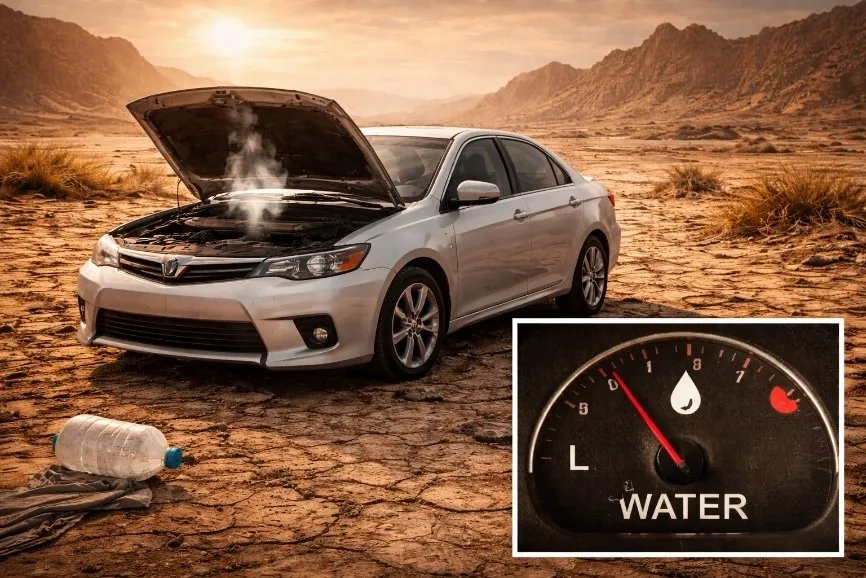
Thirst is not an early warning system. It's a late-stage alarm.
The principle: intake should match usage
The most physiologically sensible rule is simple: your water intake should reflect your water usage. Because daily usage is hard to measure precisely, the book offers a clear, workable baseline:
Drink an amount of water, in fluid ounces, equal to half your body weight in pounds, each day.
For someone weighing 150 lb (10.7 stone), that's 75 fl oz, or about 2.13 litres a day. It is the author's suggested starting point, not a medical prescription, and individual needs vary.
Quick reference
| Weight (stone) | Weight (lb) | Water (fl oz) | Water (litres) |
|---|---|---|---|
| 10.7 | 150 | 75 | 2.13 |
| 11.7 | 164 | 82 | 2.33 |
| 12.7 | 178 | 89 | 2.53 |
| 13.7 | 192 | 96 | 2.73 |
| 14.7 | 206 | 103 | 2.92 |
| 15.7 | 220 | 110 | 3.12 |
| 16.7 | 234 | 117 | 3.32 |
| 17.7 | 248 | 124 | 3.52 |
You can also explore the author's formula in kilograms, stone or pounds.
A baseline, not a ceiling
From there, intake should rise with exercise, heat, stress and illness. And raising it should be done intelligently: gradually, consistently, spread through the day, and alongside good elimination, rest and nutrition.
Hydration works best when it is boringly consistent.
If you have a heart, kidney or liver condition, or your doctor has advised you to limit fluids, please follow their guidance rather than any general formula.
This article is for education and general wellbeing. It isn't medical advice. Persistent or unexplained symptoms deserve proper medical assessment, and if your doctor has advised you to limit fluids, follow their advice.
Chapter 14 goes further: how quickly to raise intake, minerals, timing and the most common mistakes.
Enjoyed this article? Get The Water Letter.
New articles, author insights, book updates and events.
Sources: the ideas in this article come from The Irrefutable Power of Water. See the book's scientific references.