The author's framework
Understanding Unintentional Chronic Dehydration (UCD)
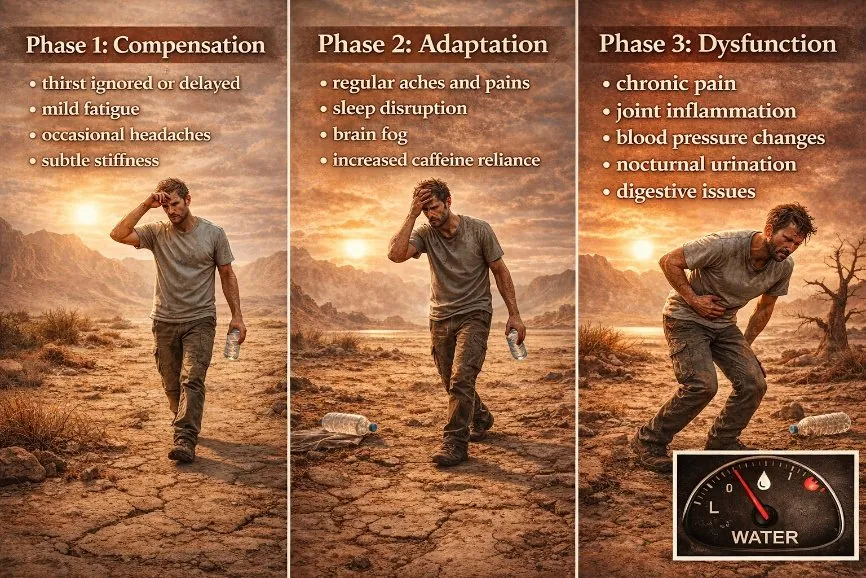
In The Irrefutable Power of Water, Erran Warden proposes UCD as a way of thinking about everyday, long-term drinking habits. It is the author's educational framework, not a recognised medical diagnosis.
What the author proposes
Most people associate dehydration with heatwaves, intense exercise or illness. The author proposes that a quieter pattern also deserves attention: consistently drinking a little less than the body uses, over months and years.
In Chapter 3 he describes how, in his view, the body adapts to that pattern, and why he believes it can be easy to overlook. The book presents these ideas to encourage curiosity and reflection, alongside, never instead of, medical care.
UCD is a concept proposed by the author. It is not presented here as an established clinical diagnosis. Persistent or unexplained symptoms always deserve proper medical assessment.
Recognised signs of dehydration
The NHS lists symptoms of dehydration in adults and children including:
- feeling thirsty
- dark yellow, strong-smelling pee
- peeing less often than usual
- feeling dizzy or lightheaded
- feeling tired
- a dry mouth, lips and tongue
- sunken eyes
Many of these signs have other causes too. If you're worried about your health, contact your GP or NHS 111.
From Chapter 14
Explore the author's hydration formula.
In Chapter 14, Erran describes a starting point he uses: half your body weight in pounds, expressed in fluid ounces per day. This tool simply illustrates that arithmetic. It is not a medically assessed fluid requirement, and individual needs vary with health, activity, climate and medication.
If you have a heart, kidney or liver condition, are pregnant, or have been advised to limit fluids, follow your healthcare professional's advice instead.
Explore further
Chapters 2, 3 and 14 explore the eight-glasses rule, the UCD framework and the author's formula in depth.