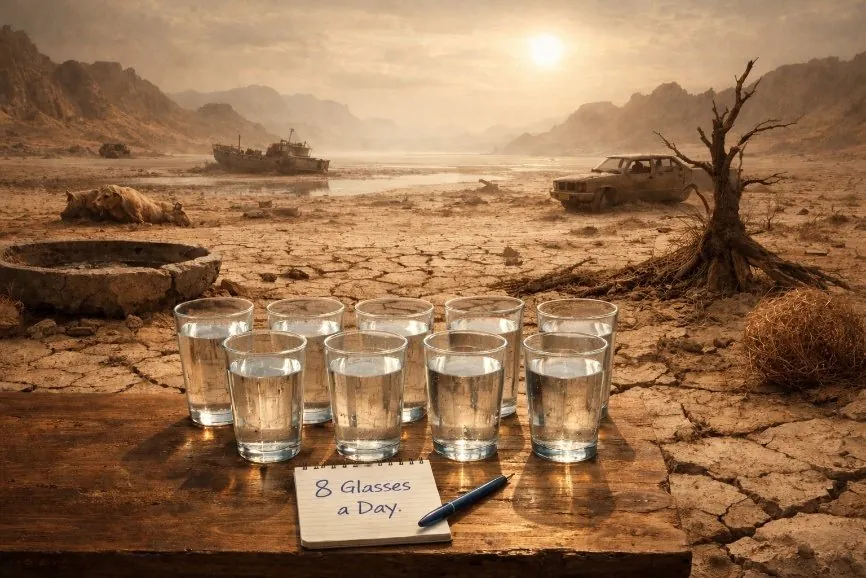
Most people who drink water every day assume they're hydrated. It feels like a reasonable assumption. But drinking water and being adequately hydrated are not the same thing, and the gap between them is where Erran Warden's concept of Unintentional Chronic Dehydration (UCD) lives.
Not the dramatic kind
As Erran describes it, UCD isn't the dehydration of heatstroke or a hospital admission. It's the long-term state of consistently drinking less than the body actually uses. The key word is consistently. It develops slowly, silently and adaptively.
It's not a result of negligence. It's a direct consequence of miscalculation.
Most people genuinely believe they drink enough, because no one ever taught them how to work out what “enough” means for their body.
Why it hides in plain sight
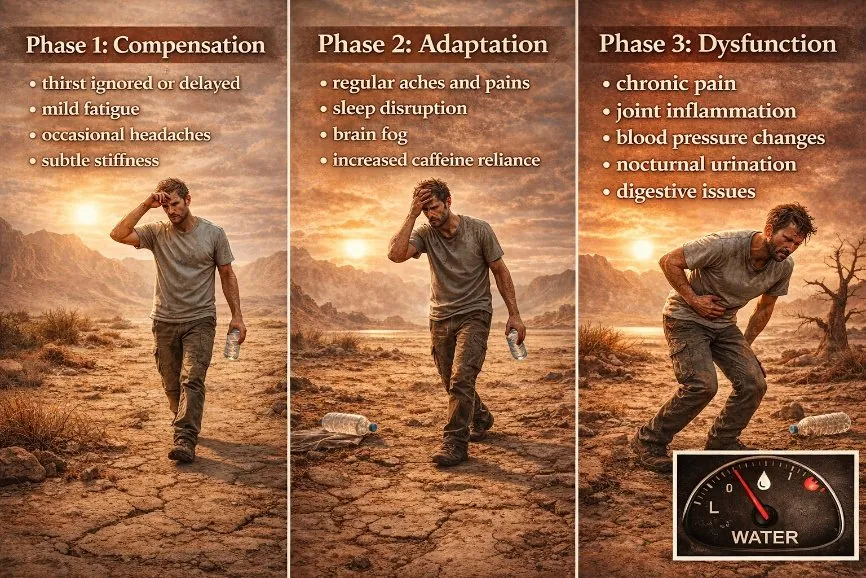
The body is remarkably good at protecting itself. When water runs short, it doesn't shut down; it rations. Blood volume is protected first, then the brain. Everything else negotiates: joints receive a little less lubrication, muscles lose some elasticity, spinal discs compress, the bladder becomes more irritable, sleep becomes lighter.
The author believes this may be why blood tests can look normal while someone feels anything but. And it's why the signs are so easily blamed on age, stress, genetics or “wear and tear”.
Everyday signs the author discusses
Chapter 14 discusses more than twenty everyday signs. Many have other causes, so treat them as prompts for reflection, not a way to diagnose yourself. A few examples:
- feeling tired or sluggish much of the time
- brain fog or poor concentration by mid-afternoon
- headaches
- sugar cravings (thirst often disguises itself as hunger)
- morning stiffness that lasts longer than it should
- swollen hands or ankles by evening
- waking at night to pee
- dark or strong-smelling urine
Individually, these signs may not seem serious. Together, they tell a noticeably clear story.
A framework, not a diagnosis
UCD is offered as an educational framework: a way of asking better questions about everyday hydration, not a medical diagnosis or an explanation for every symptom. The aim, in the book's own words, is “leverage, not fear”.
This article is for education and general wellbeing. It isn't medical advice. Persistent or unexplained symptoms deserve proper medical assessment, and if your doctor has advised you to limit fluids, follow their advice.
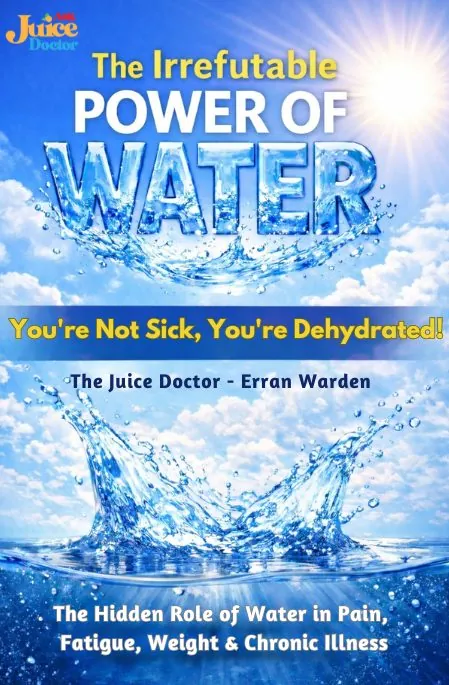
Explore the concept further, and take the five-question Hydration Reflection.
Enjoyed this article? Get The Water Letter.
New articles, author insights, book updates and events.
Sources: the ideas in this article come from The Irrefutable Power of Water. See the book's scientific references.